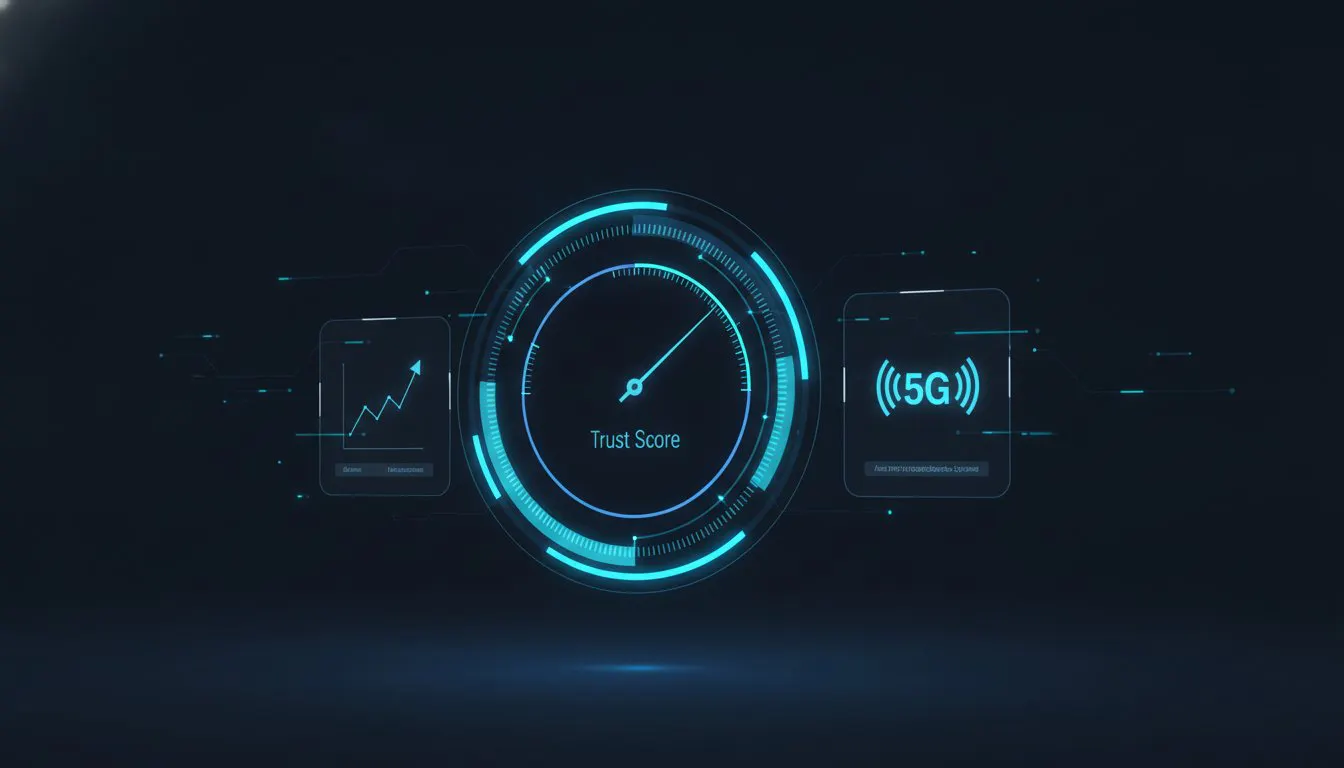
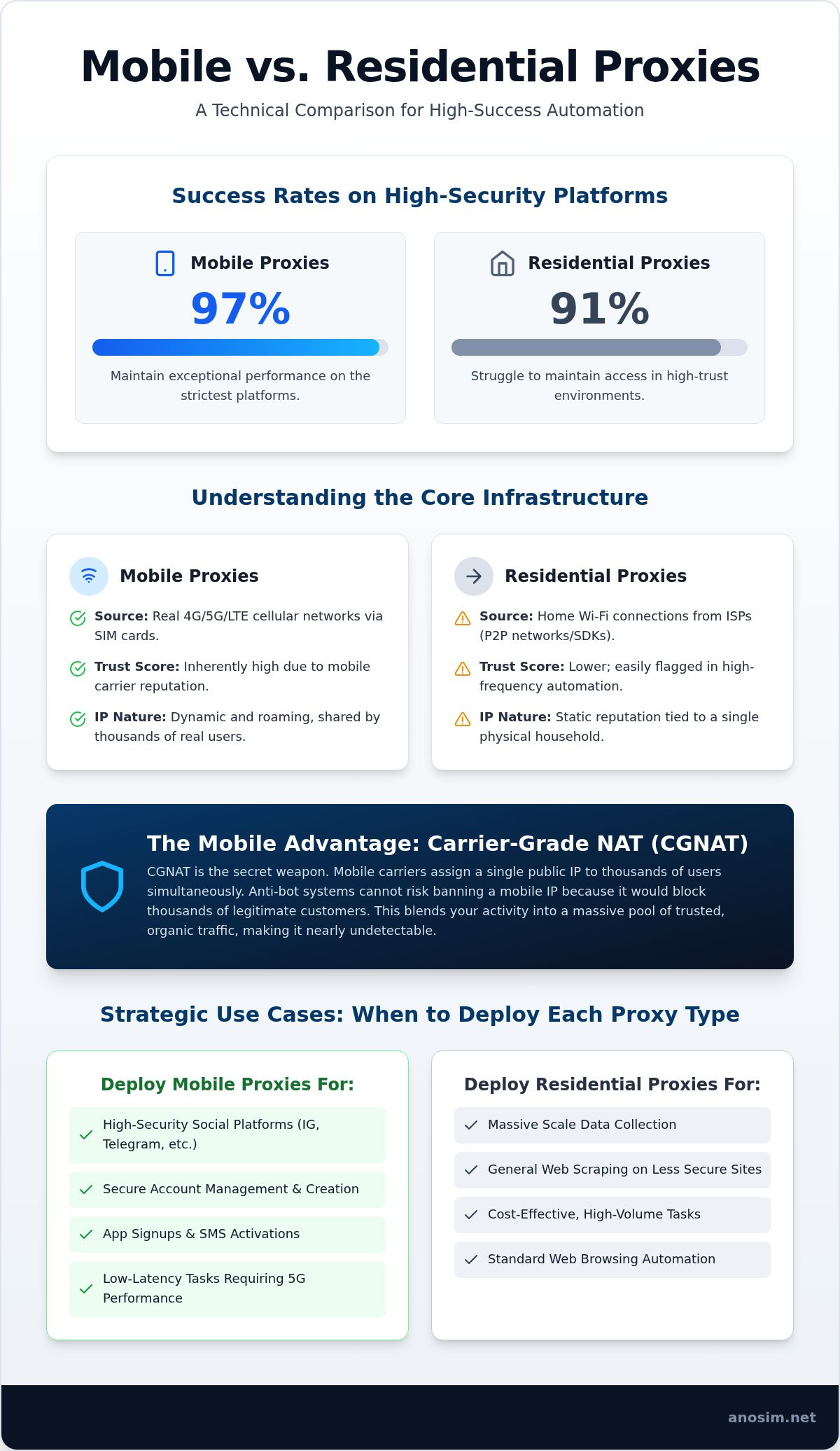
Did you know that mobile proxies maintain a 97% success rate on high-security social platforms, while even the most reputable residential pools often struggle to exceed 91%? You've likely experienced the frustration of watching your residential IPs get flagged during a high-stakes scrape or seeing a Telegram account restricted before it's even operational. It's becoming increasingly clear that standard residential infrastructure isn't the universal solution it once was for high-trust environments.
This technical comparison of mobile proxies vs residential proxies clarifies why architectural differences like Carrier-Grade NAT (CGNAT) and the 2026 shift toward 5G and IPv6 fundamentally change the ROI of your automation stack. You'll learn how to leverage these infrastructures to reduce ban rates and improve scraping frequency. We'll examine the specific trust scores, speed benchmarks, and deployment scenarios that dictate whether you should invest in the premium security of mobile networks or the massive scale of residential pools for your 2026 privacy and automation needs.
Key Takeaways
- Understand how CGNAT technology allows mobile proxies to bypass advanced detection systems that frequently flag standard residential IP addresses.
- Evaluate the technical trade-offs of mobile proxies vs residential proxies to determine which infrastructure offers the best ROI for your specific automation tasks.
- Discover why 5G has become the 2026 benchmark for low-latency performance in high-security account management and verification.
- Identify the specific use cases where the massive scale of residential pools is more cost-effective than the premium trust layer of mobile carriers.
- Learn how to integrate high-trust mobile proxy pools with SMS activation APIs to build a resilient and professional privacy stack.
Table of Contents
- Understanding the Infrastructure: Mobile vs. Residential Proxies
- The Reputation Gap: Why Mobile IPs Bypass Advanced Detection
- Performance and Reliability: Comparing Speed and Stability
- Strategic Use Cases: When to Deploy Each Proxy Type
- Scaling Operations with High-Trust Mobile Infrastructure
Understanding the Infrastructure: Mobile vs. Residential Proxies
A proxy server acts as an essential intermediary in digital operations, but its effectiveness depends entirely on its underlying network. When evaluating mobile proxies vs residential proxies, the difference starts with the physical hardware that originates the IP address. Residential proxies rely on landline broadband connections, while mobile proxies utilize cellular data networks provided by major carriers. This technical distinction creates a significant gap in how platforms perceive your legitimacy and directly influences your operational success rates.
How Residential Proxies Source IPs
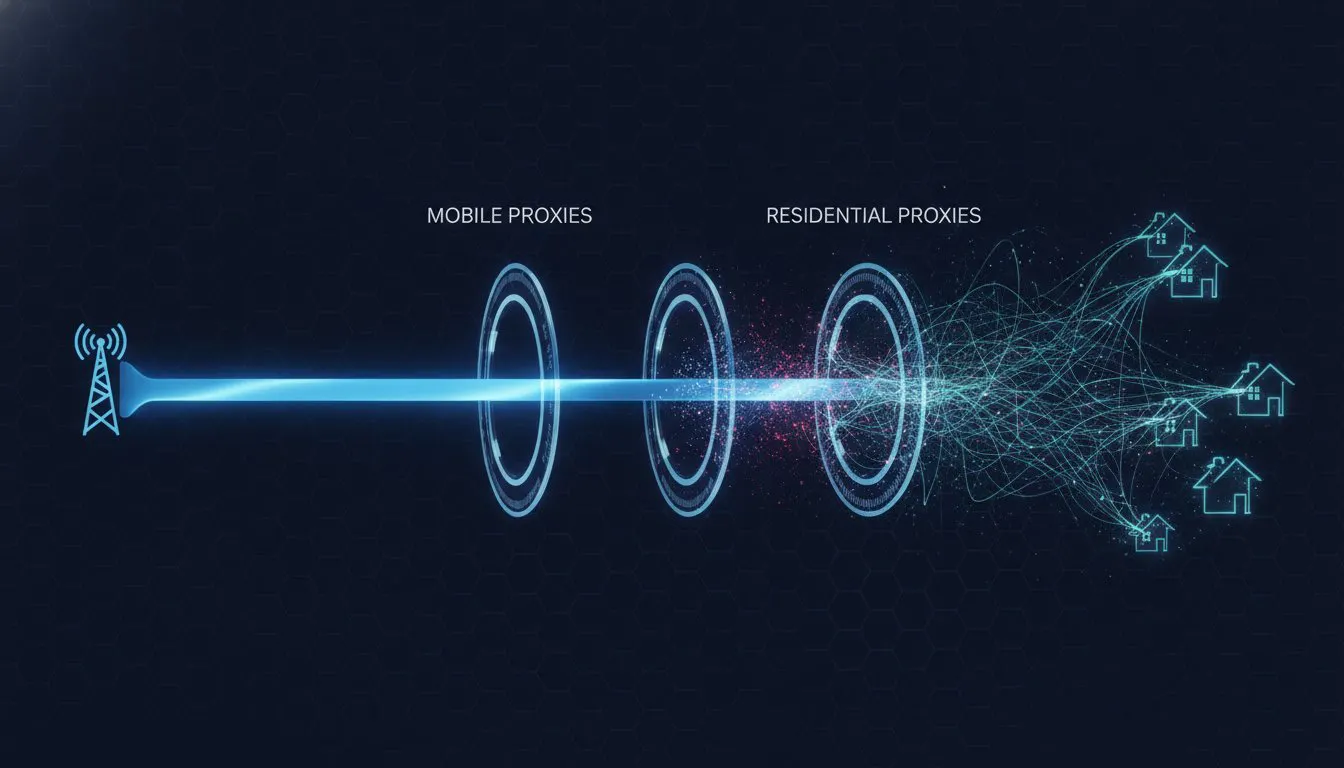
Residential proxies function by routing traffic through IP addresses assigned to home Wi-Fi networks by Internet Service Providers (ISPs). These IPs are typically sourced through peer-to-peer (P2P) networks where users share their bandwidth or through Software Development Kits (SDKs) embedded in various applications. The connection is physically tied to home routers and fiber or DSL lines. Because these IPs are tied to a fixed physical location, they're reliable for standard browsing. However, they've a clear limitation in high-frequency automation. If an automated script triggers a security filter, a residential IP is easily isolated and blacklisted because it's expected to represent a single household or a small group of users.
The Architecture of Mobile Proxies
Mobile proxies utilize cellular hardware rather than home routers. The architecture involves routing traffic through real mobile towers using SIM cards and sophisticated modem arrays. These devices connect to 4G, 5G, or LTE networks just like a standard smartphone. The primary advantage here is the roaming nature of the connection. Mobile carriers use Carrier-Grade NAT (CGNAT) to assign the same public IP address to thousands of different mobile devices simultaneously. Websites can't easily ban these IPs; doing so would inadvertently block thousands of legitimate human users. This hardware-level ambiguity makes mobile proxies significantly harder for platforms to distinguish from organic traffic compared to residential alternatives.
The choice between these two infrastructures ultimately impacts your operation's trust score. Platforms like Instagram, Tinder, or Telegram assign a higher level of authority to mobile IPs because they assume the traffic originates from a mobile device on a trusted carrier network. While residential proxies offer a stable, cost-effective solution for massive data collection, mobile proxies provide the high-trust layer necessary for sensitive account management and secure app signups. Understanding this hardware foundation is the first step in optimizing your 2026 automation strategy and reducing account ban rates.
The Reputation Gap: Why Mobile IPs Bypass Advanced Detection
The performance gap between different proxy types is often measured in success rates. Research indicates that mobile proxies maintain a 97% success rate on high-security social platforms, while residential proxies typically hover around 91%. This 6% difference might seem small, but in high-volume automation, it represents the line between a profitable operation and a wave of account bans. The reason for this disparity lies in the fundamental reputation of the IP source.
Comparing mobile proxies vs residential proxies reveals that the latter often suffers from static reputation decay. When a residential IP is flagged, it stays flagged because it's tied to a single household. Mobile IPs operate on a different logic entirely, leveraging the trust established by multi-billion dollar telecommunications infrastructure.
CGNAT: The Secret Weapon of Mobile Proxies
Most mobile carriers utilize Carrier-Grade NAT (CGNAT) to manage the global shortage of IPv4 addresses. This technology allows thousands of individual mobile devices to share a single public IP address simultaneously. When you access a platform through a mobile proxy, your traffic is indistinguishable from the thousands of other legitimate users sharing that same gateway. CGNAT functions as a technical shield for proxy users by blending automated traffic into a massive pool of legitimate carrier-assigned sessions.
Websites face a massive risk-reward dilemma when they detect suspicious activity on a mobile IP. If an anti-bot system blacklists a cellular IP, it doesn't just block one bot; it potentially blocks thousands of real, paying customers using their smartphones on that same carrier network. Platforms almost always choose to allow the traffic rather than risk the collateral damage of blocking their actual user base.
Detection Logic in 2026
Anti-bot systems in 2026 have moved beyond simple IP blacklisting. They now use AI-driven metadata analysis to build "Trust Profiles." Residential IPs are frequently added to "dirty lists" because they're static and easily isolated. If a residential IP performs 500 requests a minute, it's clearly a bot. However, a mobile IP performing that same volume looks like a busy cellular tower.
Mobile IPs also benefit from natural rotation. Carriers reassign these IPs constantly as devices move between towers or reconnect to the network. This constant churn prevents negative reputation from sticking to any single mobile gateway. When choosing between mobile proxies vs residential proxies for 2026 automation, the technical reputation and inherent "cleanliness" of the IP is the most critical variable. If your goal is long-term account stability, using high-trust mobile proxies is a logical step to ensure your operations remain undetected by modern security headers.
Performance and Reliability: Comparing Speed and Stability
Performance benchmarks for mobile proxies vs residential proxies have shifted significantly with the universal adoption of 5G. In earlier years, residential fiber connections were the undisputed champions of raw speed. By August 2026, 5G infrastructure has matured to provide consistent speeds between 10 and 100 Mbps. While residential lines still reach 50-500 Mbps, the performance bottleneck for most automation isn't raw bandwidth. It's latency and the reliability of the connection handshake. Reliability is where the two architectures diverge most sharply.
Residential proxies often suffer from what engineers call "connection flicker." This happens because residential IPs are usually sourced from home routers. If a homeowner reboots their router or their device goes into sleep mode, your proxy connection dies instantly. Mobile proxies are different. They route through carrier-grade hardware designed for 99.9% uptime. Because mobile towers are built to handle thousands of handoffs per second, the connection remains stable even if the underlying device moves between network cells.
The 5G Impact on Mobile Proxy Speed
The 2026 standard for mobile proxies is native 5G. This technology has effectively closed the gap with home Wi-Fi by reducing latency to under 20ms in many urban areas. While raw throughput is still lower than high-end fiber, it's more than sufficient for account management and moderate scraping. However, performance still depends on carrier congestion. During peak hours, a mobile proxy might see a 15% dip in speed, whereas a residential fiber line remains relatively static. If your task requires massive data transfers, residential proxies are usually the faster choice, but for tasks where response time and anonymity are balanced, 5G mobile proxies are now the benchmark.
Connection Stability and Failover
Managing "dead IPs" is a common pain point for those using residential pools. Large-scale residential providers often have high churn rates, meaning your script must include robust failover logic to rotate to a new IP when the current one drops. Dedicated mobile proxy hardware offers a more persistent session. You can often maintain the same mobile IP for hours or even days, provided the carrier doesn't force a rotation.
For automated workflows on platforms like Tinder or Telegram, session persistence is vital. Frequent IP drops during a signup process are a major red flag for anti-bot systems. Mobile proxies provide the stability needed to complete complex multi-step verifications without the connection timing out. When comparing mobile proxies vs residential proxies for reliability, mobile hardware wins on session duration and uptime, while residential wins on sheer bandwidth capacity.
Strategic Use Cases: When to Deploy Each Proxy Type
Choosing between mobile proxies vs residential proxies is ultimately an exercise in balancing operational cost against the required trust level. For large-scale data harvesting where volume is the priority, residential proxies are the logical choice. Their massive pool sizes, often exceeding 10 million IPs, allow for high-concurrency scraping at a significantly lower cost-per-gigabyte than mobile alternatives. This makes them ideal for price monitoring and SEO analysis where the risk of a single IP being flagged is offset by the sheer size of the rotation pool.
However, when the task involves interacting with high-security firewalls or managing sensitive digital identities, mobile infrastructure becomes non-negotiable. Mobile proxies are optimized for bypassing strict SMS and phone verification firewalls that often block residential traffic by default. They provide a layer of anonymity that residential IPs, tied to fixed locations, simply cannot match in 2026.
Account Creation and Warm-up
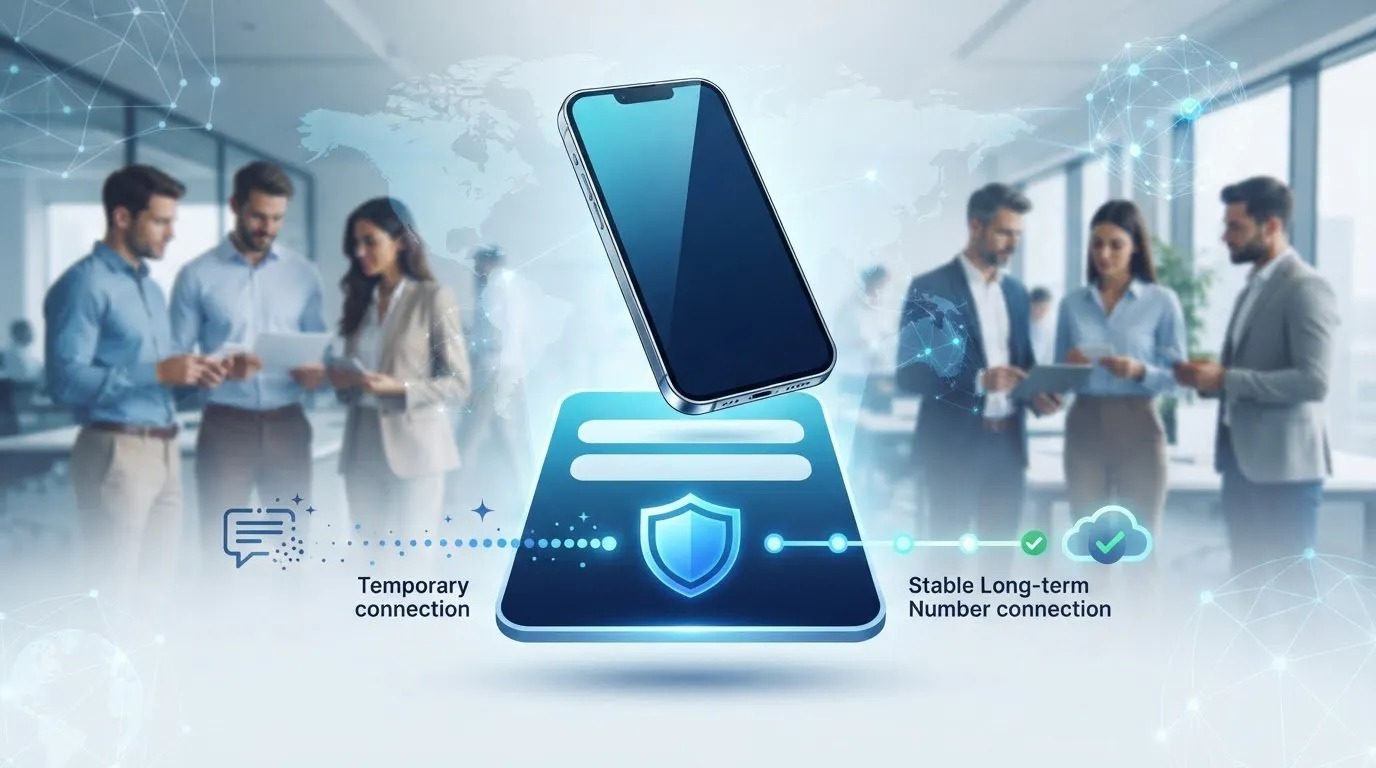
Platforms such as Tinder and Telegram have implemented sophisticated detection logic that analyzes the connection type during the signup process. Residential IPs are often associated with desktop or Wi-Fi traffic. If you're attempting to create multiple accounts, these platforms may flag the activity as unnatural for a home connection. Using mobile proxies allows you to mimic a real smartphone user profile, leveraging the high trust score of carrier networks. You can learn how to bypass Tinder phone verification securely by combining mobile proxies with virtual number services to ensure a seamless account warm-up and long-term stability.
Market Research and Competitor Analysis
For market research and competitor analysis, the goal is to scrape dynamic pricing data without triggering CAPTCHAs or being served "poisoned" data. Residential proxies work well for broad coverage across different ISPs. But for localized testing at the carrier level, mobile proxies provide a more authentic view of how ads and content appear to cellular users. This is critical for ad verification where brands need to ensure their campaigns aren't being hijacked by malicious redirects on mobile networks. IP rotation for these scraping operations runs through the API of our partner proxied.com, while the Anosim API handles number rental and inbound SMS retrieval inside your existing codebase.
If your workflow requires high-volume data collection with minimal security risk, residential pools provide the necessary scale. If you're managing accounts or performing high-stakes verifications, renting mobile proxies from our partner proxied.com is the more secure path to ensuring your operations remain undetected and efficient.
Scaling Operations with High-Trust Mobile Infrastructure
Scaling an operation in 2026 requires more than just a large pool of IPs. While the technical debate of mobile proxies vs residential proxies often centers on success rates, professional scaling requires a cohesive infrastructure. Our partner proxied.com provides the clean, high-trust mobile proxy pools optimized for professional-grade automation, while Anosim covers the numbers and SMS verification. This isn't just about avoiding a ban; it's about building a digital footprint that platforms recognize as human and legitimate. By routing traffic through real carrier infrastructure, these proxies maintain the reputation scores necessary for today's most restrictive digital environments.
The choice between mobile proxies vs residential proxies should be dictated by the end-to-end security of your workflow. If you're managing high-value accounts, you need the stability of a mobile network that isn't prone to the "dead IP" issues common in residential peer-to-peer networks. Anosim focuses on providing a stable, expert facilitator role, ensuring your infrastructure is a silent partner in your operational success.
The Synergy of Proxies and SMS Activation
Most high-security platforms now perform cross-channel verification to identify bots. If you're using a mobile proxy but your account is linked to a recycled residential number or a VoIP line, the trust score drops significantly. To achieve seamless signups, you should Explore SMS Activation for OTP verification to ensure your virtual identity signals are consistent. Using a mobile IP alongside a matching virtual number reduces the friction in automated account creation workflows. This synergy makes it much harder for anti-bot systems to isolate your activity, as the entire session appears to originate from a single, trusted cellular device.
Technical Integration for Developers
Developers need tools that fit into existing CI/CD pipelines and automation scripts without unnecessary complexity. Proxy sessions are managed through the API of our partner proxied.com, while the Anosim API (v1) covers number rental and SMS retrieval. At proxied.com you can customize rotation intervals and carrier settings to match the specific behavioral patterns of your target platform. This level of customization is essential for maintaining long-term account health and maximizing the ROI of your proxy investment.
Anosim’s inbound-only infrastructure is engineered for maximum reliability, ensuring that verification data reaches your automated workflows without the interference common in two-way communication channels. By focusing on inbound data and SMS, the platform eliminates the risks associated with outgoing traffic, keeping your operational footprint secure and private. This utility-first approach allows you to focus on your core business logic while the infrastructure handles the complexities of carrier-grade networking and digital anonymity.
Future-Proofing Your Automation Infrastructure
The choice between mobile proxies vs residential proxies remains a strategic decision based on your specific volume and security requirements. While residential pools are excellent for high-volume scraping at a lower cost-per-gigabyte, the 97% success rate of mobile IPs on high-security platforms makes them indispensable for account management. By utilizing CGNAT technology and 5G speeds, you ensure your automation mimics legitimate human behavior on a global scale. These technical advantages are essential for bypassing the AI-driven anti-bot systems that dominate the 2026 digital landscape.
Integrating these high-trust proxies with automated SMS verification allows you to build a resilient privacy stack that detection systems cannot easily penetrate. Our partner proxied.com provides the optimized 4G/5G infrastructure, and Anosim adds the developer-ready API integration for numbers and SMS needed to scale these operations efficiently. It's time to move beyond standard residential proxies and embrace a utility-first approach to digital anonymity that prioritizes reliability and success frequency. You're now equipped to build a more secure and reliable automation workflow.
Get Started with High-Trust Mobile Proxies and SMS Activation
Frequently Asked Questions
What is the main difference between mobile and residential proxies?
The primary distinction lies in the network source and the hardware used to generate the IP. Residential proxies originate from home Wi-Fi connections via standard Internet Service Providers, while mobile proxies use cellular data networks provided by carriers like 4G, 5G, or LTE. This difference determines how websites perceive your legitimacy. Mobile IPs carry higher authority because they're assigned to real cellular devices, making them harder to isolate than fixed residential lines.
Why are mobile proxies more expensive than residential proxies?
Mobile proxies command a premium because of the specialized hardware and bandwidth costs associated with cellular carriers. Maintaining a dedicated modem array with real SIM cards is more resource-intensive than routing traffic through existing residential Wi-Fi networks. The higher success rates and the unique "crowd effect" provided by CGNAT technology make mobile infrastructure a more valuable asset for high-security automation tasks that require maximum anonymity.
Can mobile proxies be detected by websites?
While no proxy is completely invisible, mobile proxies are the most difficult to detect because they use real carrier IPs. Advanced anti-bot systems analyze IP metadata to see if a connection originates from a known data center or a residential ISP. Mobile IPs look identical to legitimate smartphone users. Because thousands of users share the same mobile IP via CGNAT, websites rarely block them to avoid the risk of blocking legitimate customers.
Are residential proxies better for web scraping than mobile proxies?
Residential proxies are generally better for high-volume web scraping due to their massive pool sizes and lower cost-per-gigabyte. If your task requires rotating through millions of unique IPs to collect public data, the scale of residential networks is superior. However, if you're scraping a platform with aggressive anti-scraping measures, the higher trust score of a mobile proxy may be necessary to maintain a steady success rate and avoid persistent blocks.
What is CGNAT and why does it matter for mobile proxies?
Carrier-Grade NAT (CGNAT) is a networking technology that allows mobile carriers to assign a single public IP address to thousands of cellular devices simultaneously. This creates a technical shield for proxy users. When comparing mobile proxies vs residential proxies, CGNAT is the primary reason mobile IPs are rarely blacklisted. Blocking one mobile IP would mean blocking thousands of legitimate human customers, which most platforms are unwilling to do for security reasons.
How does IP rotation work with mobile proxies?
IP rotation in mobile proxies occurs when the carrier reassigns a new IP to the cellular device or when the proxy provider triggers a reconnection. In 2026, most carriers rotate IPs naturally as devices move between towers or session timers expire. Users can often control this via an API to set specific intervals. This constant churn ensures that no single IP accumulates a negative reputation, keeping your automated workflows and account management clean.
Do I need a mobile proxy for social media automation in 2026?
Mobile proxies are practically mandatory for social media automation on platforms like Instagram, TikTok, or Tinder in 2026. These platforms use sophisticated device fingerprinting and IP reputation checks. A residential IP often signals a bot on a home connection, whereas a mobile IP signals a legitimate app user. Using mobile proxies significantly reduces account ban rates and improves the success frequency of automated signups and interactions during high-stakes account warm-ups.
Are mobile proxies faster than residential proxies?
Mobile proxies are generally not faster than residential proxies in terms of raw bandwidth. While 5G has closed the gap significantly, fiber-based residential connections still offer higher throughput. However, mobile proxies often provide better perceived speed in automation because they encounter fewer CAPTCHAs and security delays. When evaluating mobile proxies vs residential proxies, prioritize residential for data-heavy downloads and mobile for low-latency, high-trust handshakes during sensitive account verifications.