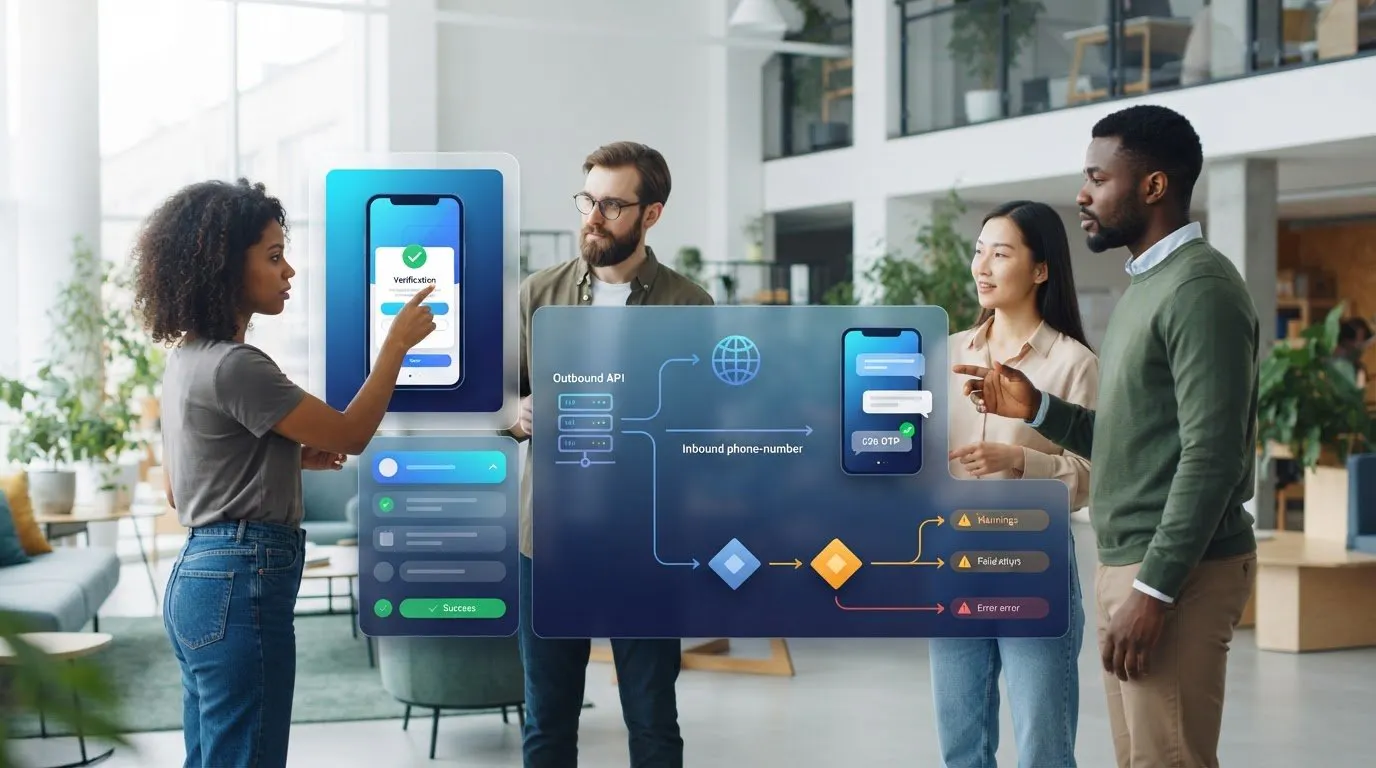
Your business account verification is likely failing because the "mobile" number you purchased is actually a landline sitting in a server rack. Major platforms have become adept at identifying and blocking traditional virtual numbers that lack a legitimate cellular footprint. You've probably experienced the frustration of one-time passwords (OTPs) that never arrive or the sudden shadowbanning of a new account due to a low-trust IP reputation. It's a common hurdle for operations that require scale and privacy, but it's one that standard landline-based VoIP can no longer clear.
Using high-trust mobile voip for business verification ensures your numbers are recognized as authentic mobile devices rather than flagged virtual assets. This guide provides the technical roadmap to securing reliable inbound SMS infrastructure that bypasses strict filters for seamless account creation. You'll learn how to achieve successful verification on your first attempt while maintaining a professional digital footprint. We'll examine the mechanics of high-trust IP reputations, the impact of 2026 A2P 10DLC regulations on deliverability, and how to use API integration to automate SMS handling for maximum operational efficiency.
Key Takeaways
- Understand why major platforms block standard virtual numbers and how mobile network routing restores your account trust levels.
- Learn the technical differences between cloud PBX and high-trust mobile voip for business verification to ensure your OTPs arrive every time.
- Discover the criteria for selecting geographic regions and number rental durations based on your specific platform requirements.
- Explore how to automate large-scale verification workflows using programmatic API integration for seamless inbound SMS handling.
- Identify the critical metrics for evaluating providers, focusing on carrier trust scores and the necessity of clean IP reputations rather than just price.
Table of Contents
- Why Standard VoIP Fails Business Verification in 2026
- Mobile VoIP vs. Traditional Business Phone Systems
- How to Implement Mobile VoIP for Account Creation
- Scaling Verification with SMS Activation APIs
- Choosing the Right Mobile VoIP Solution for Your Business
Why Standard VoIP Fails Business Verification in 2026
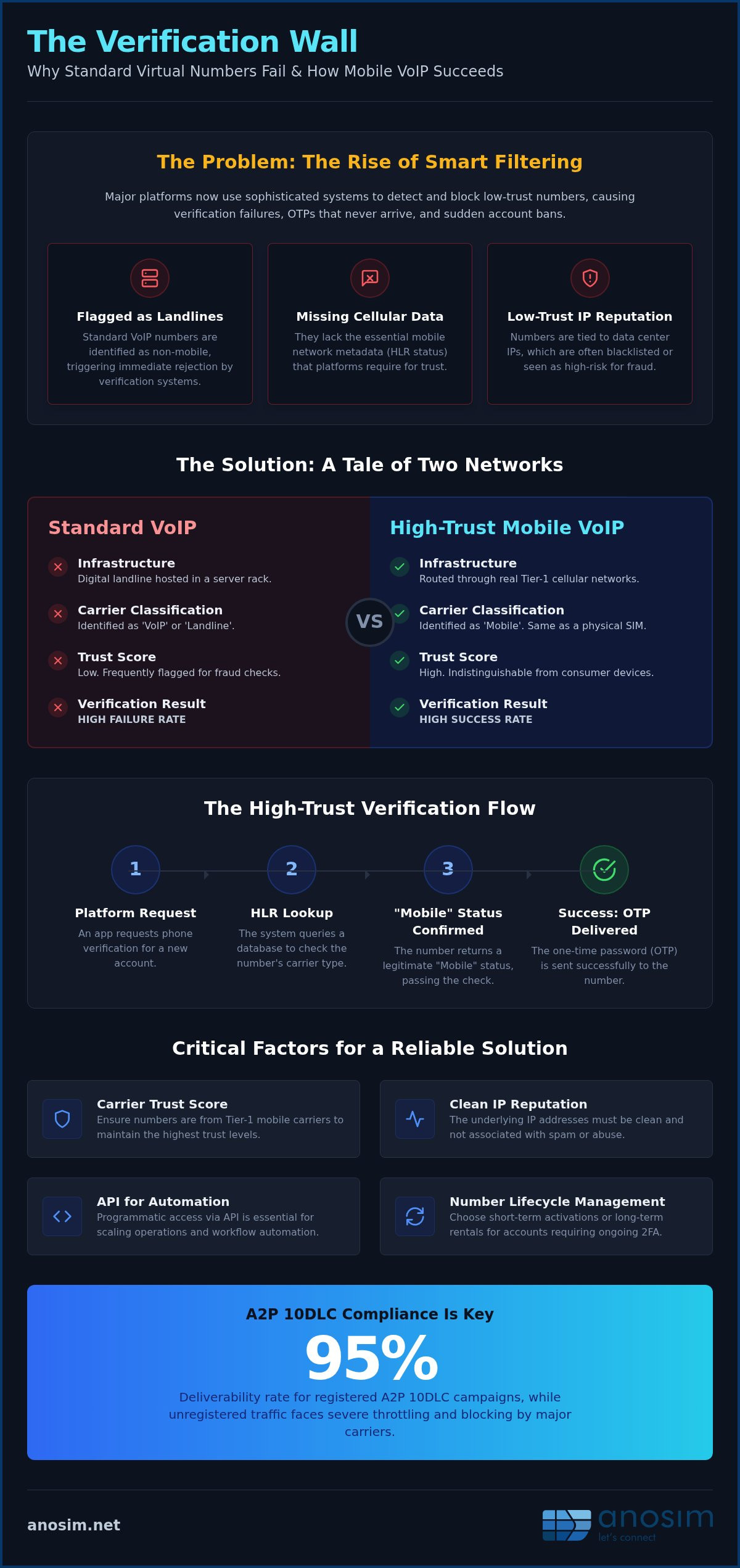
Verification systems have evolved beyond simple SMS delivery. In 2026, the underlying infrastructure of your phone number determines whether you're granted access or flagged as a bot. Traditional virtual numbers, often classified as "non-fixed VoIP," are essentially digital landlines. While they work for voice calls, they lack the cellular metadata that high-security platforms require. The technical shift toward mobile voip for business verification reflects a broader industry crackdown on digital fraud and unauthorized account scaling.
Platforms like Google, WhatsApp, and various fintech apps now query Number Portability Databases (NPDB) in real time. If a number is tagged as a landline or a data-center-hosted virtual line, the system often triggers an immediate rejection. This isn't a glitch; it's a deliberate security protocol designed to ensure that the user is a real person with a legitimate mobile device. To bypass these filters, you need a solution that mimics the footprint of a physical SIM card.
The Rise of Virtual Number Filtering
Carriers have significantly tightened Application-to-Person (A2P) SMS filtering to comply with updated 10DLC (10-digit long code) regulations. As of May 2026, unregistered A2P traffic is frequently blocked or throttled by major US carriers. This makes standard business phone systems unsuitable for account setup because they are often registered as corporate landlines rather than individual mobile subscribers. By leveraging Mobile VoIP technology, businesses can access numbers that carry the same metadata as a standard smartphone, allowing them to pass through automated filters that stop traditional virtual numbers.
- Carrier Classification: Databases identify numbers as 'Mobile', 'Landline', or 'VoIP'. Most verification systems only accept 'Mobile'.
- A2P Compliance: Registered 10DLC campaigns now achieve deliverability rates up to 95%, while unregistered VoIP traffic faces strict daily limits.
- Infrastructure: Traditional VoIP is hosted in server racks; mobile-backed VoIP is routed through actual cellular network nodes.
Metadata and Trust Scores
Verification services use Home Location Register (HLR) lookups to verify a number's status on a cellular network. This query checks if the number is currently active and which mobile switching center it's connected to. If the HLR response shows no cellular activity, the trust score drops. Anosim provides Rent Mobile VoIP services that utilize actual mobile network infrastructure, ensuring that HLR lookups return a "Mobile" status. Trust Score is the probability a platform accepts a number based on its carrier origin. High-trust numbers are sourced from Tier-1 mobile carriers, making them indistinguishable from consumer SIM cards. This technical accuracy is why the FCC removed over 1,200 non-compliant VoIP providers from the Robocall Mitigation Database in August 2025; platforms now only trust providers who maintain strict cellular-grade standards.
Mobile VoIP vs. Traditional Business Phone Systems
Traditional business phone systems, often managed through a Cloud PBX, are built for human-to-human communication. They prioritize voice quality and outbound calling capacity; for businesses that want to optimize their outreach with AI-powered dialers, they can learn more about Nexdial. However, these systems frequently fail when used for mobile voip for business verification because their infrastructure is tied to landline or data center IP ranges. In contrast, mobile-backed VoIP routes traffic through cellular network nodes. This technical distinction is critical. Platforms like Google and WhatsApp check the carrier type before sending a verification code. If the metadata doesn't match a mobile footprint, the code is never sent.
While the FCC guide to VoIP outlines how internet-based calling works, it doesn't account for the high-trust requirements of 2026 digital platforms. Standard business VoIP plans often include unnecessary overhead for simple verification tasks. Mobile VoIP rentals focus exclusively on inbound SMS and data. This removes the cost of outgoing call features you won't use. This inbound-only focus provides a cleaner security profile. It's a high-utility choice for developers and digital managers who value operational efficiency.
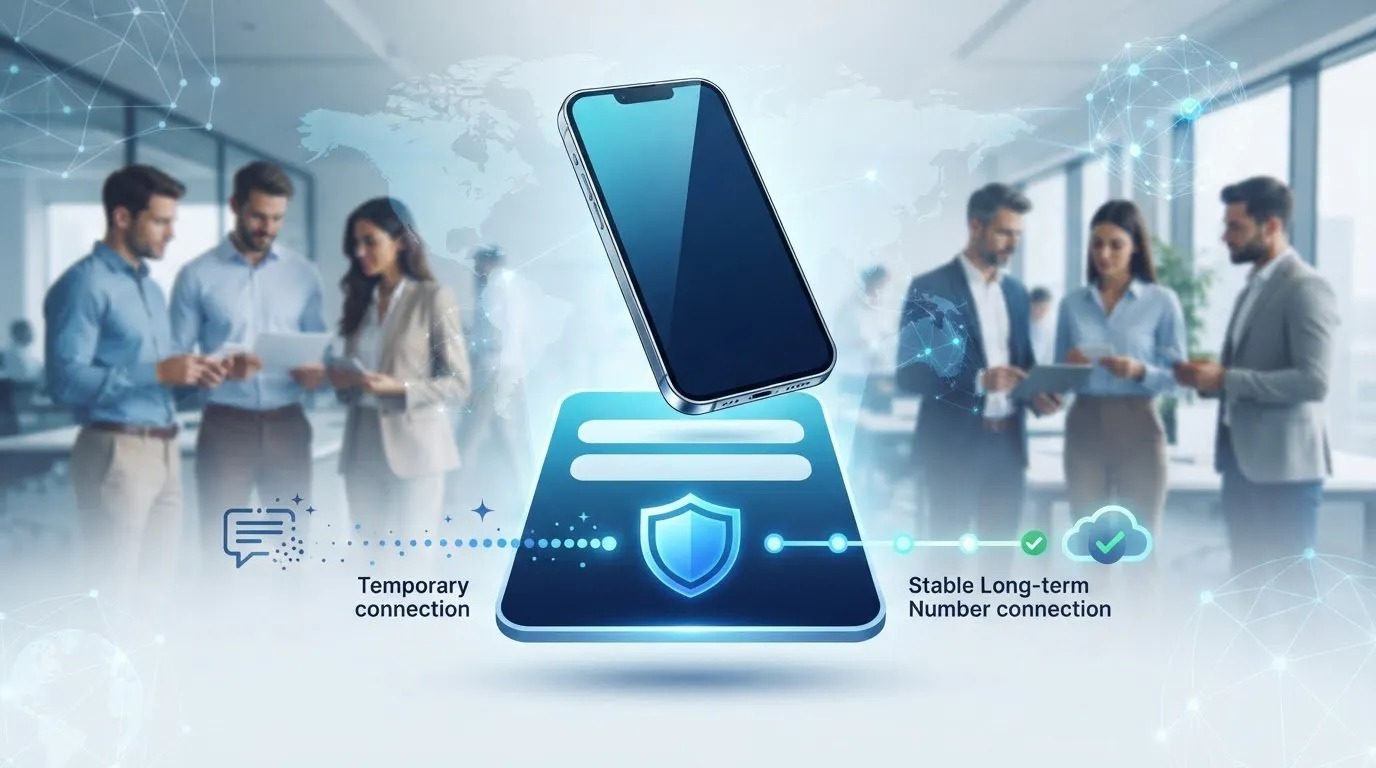
Choosing between a one-time activation and a long-term rental depends on your account's lifecycle. If you're managing a platform that requires frequent 2FA (Two-Factor Authentication) for login or recovery, a short-term activation isn't enough. You need consistent access to the same digits to avoid getting locked out. For these scenarios, using mobile voip for business verification with a long-term rental ensures you can handle recovery requests instantly. You can Rent Number assets that remain dedicated to your account for weeks or months, providing the stability needed for enterprise-level account management.
The Anonymity Advantage
Isolating your verification traffic from your primary business lines prevents data leaks. When you use your main corporate number for app signups, you create a permanent link between your identity and that account. If the app suffers a breach, your primary contact info is exposed. Using a mobile-backed virtual line provides a layer of operational security. It keeps your digital footprint segmented and professional. For more on this, read our guide on how to protect your primary phone number from data leaks at the Anosim blog. It's a pragmatic step for anyone managing multiple digital identities. If you need immediate infrastructure for a new project, our Rent Mobile VoIP service offers instant activation without the friction of long-term contracts.
How to Implement Mobile VoIP for Account Creation
Successfully deploying mobile voip for business verification requires a coordinated approach. It isn't enough to simply acquire a number; you must align your entire digital environment to meet the platform's security criteria. This technical alignment prevents automated systems from flagging your attempt as fraudulent or bot-driven. Follow these four steps to secure your business accounts.
- Step 1: Regional Selection. Choose a number that matches the intended market of your business account. If you're setting up a US-based service, use a US-originated mobile number to avoid immediate regional flags.
- Step 2: Duration Planning. Determine if you need a one-time SMS Activation or a long-term Rent Number service. Accounts that require periodic 2FA or recovery access should always use a rental.
- Step 3: Network Alignment. Use a proxy or routing solution that places your IP address in the same city or region as the phone number. Discrepancies here are the primary cause of "Shadowbanning."
- Step 4: Fingerprint Management. Clear your browser's cache, cookies, and local storage before starting. Using an anti-detect browser provides an extra layer of security by mimicking a clean, unique device.
Optimizing the Verification Flow
Platform security algorithms are designed to detect "impossible travel." If your IP address is in Singapore but you're using a UK-based number for mobile voip for business verification, the system will likely block the code. Standard VPNs are insufficient because they use data center IPs that are easily identified. To bypass these filters, use Mobile Proxies from our partner proxied.com. These provide a residential-grade connection that matches the high-trust profile of your mobile-backed number, ensuring the platform sees a consistent, legitimate user profile.
Platform-Specific Strategies
Different services have varying levels of scrutiny. WhatsApp Business, for instance, performs deep HLR lookups to ensure the number isn't a fixed landline. Telegram maintains an extensive blacklist of virtual number prefixes, which is why cellular-backed routing is mandatory for success. Google Business Profile (GBP) is particularly sensitive to number history. If you're verifying a GBP, renting a dedicated line through a Rent Mobile VoIP service is the most reliable method, as it prevents the number from being recycled by other users during your setup phase.
Scaling Verification with SMS Activation APIs
Scaling digital operations requires moving away from manual, browser-based verification. If you manage dozens or hundreds of accounts, the human error factor and time cost become significant hurdles. Programmatic access to mobile voip for business verification allows for the rapid deployment of infrastructure exactly when it's needed. By using an API, you eliminate the need for physical devices or local SIM management, allowing your team to focus on core development rather than hardware logistics.
The Anosim API (v1) provides a robust framework for managing inbound SMS at scale. It's designed for developers who need reliable, high-trust numbers without the friction of a manual interface. Because it maintains compatibility with the SMS-Activate Standard API, teams can integrate these high-utility numbers into existing workflows with minimal configuration changes. Monitoring these processes is streamlined through detailed API logs. These logs allow you to track verification success rates and optimize your resource allocation in real time, providing the data needed to maintain high-trust account statuses.
Developer Integration Guide
Integrating our service into your backend is a pragmatic process. You can request numbers and receive verification codes via standard HTTP requests, ensuring seamless data flow between your application and our infrastructure. For accounts that require persistent access, you can automate the renewal process for a Rent Number through the API. This ensures your 2FA remains active without manual intervention, which is critical for long-term account stability. For full technical specs and endpoint details, the Anosim API Documentation serves as the primary resource for implementation.
Bulk Verification Workflows
Managing a high volume of digital identities without physical hardware is a significant operational advantage. Manual verification is slow; it often leads to account flags due to inconsistent timing or browser fingerprints. An API-driven approach ensures consistency across all registrations. When you calculate the cost of manual labor against the efficiency of automated number rental, the ROI for automation is clear. You can scale your infrastructure up or down based on current project demands without the burden of maintaining a surplus of physical SIM cards. Read more about Bulk SMS Activation for High-Volume Automated Workflows to optimize your strategy. If you're ready to integrate, you can Rent Mobile VoIP assets programmatically to begin your deployment today.
Choosing the Right Mobile VoIP Solution for Your Business
Selecting a provider shouldn't be a race to the lowest price. In the niche of mobile voip for business verification, cost often correlates directly with number quality. Cheap, recycled numbers frequently carry a history of failed verification attempts or association with flagged accounts. To maintain a high-trust digital presence, you must prioritize carrier reputation and number "cleanliness." A reliable provider acts as a silent partner, providing the stable infrastructure you need to operate without constant technical friction.
Anosim's inbound-only model is a deliberate choice for reliability. By focusing exclusively on receiving SMS and data, we eliminate the complexities and security vulnerabilities associated with outgoing voice and text services. This specialization ensures that our numbers maintain a high trust score with platform filters. When you use a number that hasn't been used for spam or outbound marketing, your success rate for account creation increases significantly. It's a pragmatic approach for users who value results over unnecessary features.
Anosim's Specialized Offerings
This focus on specialized, high-performance tools is a growing trend among mobile-first enterprises; for instance, those in the inspection industry can explore PHOTO iD Mobile App Subscription to benefit from automated photo labeling and organization during professional inspections.
We provide a suite of tools tailored to different operational needs. If your project requires long-term stability for 2FA and account recovery, our Rent Mobile VoIP service is the most robust choice. For developers or marketers performing one-off tasks, SMS Activation offers a quick, cost-effective solution. To ensure your networking footprint matches your number's origin, the Mobile Proxies of our partner proxied.com provide the high-trust IP rotation necessary to bypass sophisticated bot detection systems.
Getting Started Today
Launching your first verification campaign is a streamlined process. After creating an account, you'll gain access to a centralized dashboard designed for efficiency. You can filter numbers by country, service, and duration to find the exact asset required for your task. Navigating the Anosim Rent Service allows you to select and activate numbers in seconds, whether you're using the manual interface or the API for bulk operations. This speed is essential for maintaining momentum in fast-paced digital environments.
Your business identity is a critical asset. Don't leave it to chance with low-trust virtual numbers that platforms are trained to reject. By choosing a cellular-backed solution, you ensure that your accounts remain secure and accessible from day one. You can Secure your business identity with Anosim today and start building your high-trust infrastructure with a partner that understands the technical demands of 2026 verification standards.
Secure Your Digital Infrastructure for 2026
The transition from standard virtual numbers to mobile-backed infrastructure is no longer optional for businesses operating at scale. As platform security grows more sophisticated, relying on landline-based VoIP results in rejected OTPs and restricted accounts. By prioritizing mobile voip for business verification, you ensure your digital assets carry the cellular metadata necessary to pass through high-trust filters. This technical shift, combined with precise IP alignment and automated API workflows, provides the stability required for modern account management.
Anosim serves as a silent partner, offering the reliable infrastructure needed to manage global verification tasks across 100+ platforms. Our mobile-backed systems are fully compatible with API v1 and the SMS-Activate Standard API, allowing for seamless programmatic integration. Whether you're performing a single activation or managing a high-volume rental fleet, our high-utility tools provide the anonymity and operational efficiency your projects demand. Don't let outdated communication tools stall your growth.
Start your business verification with Anosim Mobile VoIP today and build a resilient foundation for your digital operations. Success in 2026 belongs to those who adapt their infrastructure to meet the evolving standards of digital trust.
Frequently Asked Questions
For businesses looking to further strengthen their operational and financial foundations alongside their digital security, you can visit Samios Partners for expert advisory services.
Why is my VoIP number not receiving verification codes?
Your number is likely failing because platforms identify it as a non-fixed VoIP or landline asset. Many verification systems now perform real-time database queries to check a number's carrier type. If the metadata doesn't reflect a legitimate mobile network footprint, the service automatically blocks the SMS delivery. Using high-trust mobile voip for business verification solves this by routing traffic through cellular nodes, ensuring your number passes these automated carrier type checks on the first attempt.
Can I use mobile VoIP for WhatsApp Business verification?
You can verify WhatsApp Business accounts using mobile-backed VoIP, but standard virtual numbers are often rejected. WhatsApp utilizes Home Location Register (HLR) lookups to determine if a number is active on a mobile switching center. If you use a number without this cellular metadata, the platform will flag it as a virtual asset. Anosim's mobile-backed infrastructure mimics the footprint of a physical SIM, allowing you to bypass these strict filters for seamless account setup.
What is the difference between a virtual number and a mobile VoIP number?
The primary difference lies in the underlying infrastructure and the carrier metadata. Traditional virtual numbers are usually cloud-based landlines hosted in data centers, which platforms easily flag as low-trust. Mobile VoIP numbers are routed through cellular network nodes, providing the same trust profile as a physical smartphone. This distinction is critical for high-security applications where only "Mobile" carrier types are accepted for inbound SMS and account verification tasks.
Is it legal to use a virtual number for business account verification?
It is legal to use virtual numbers for verification, provided you comply with telecommunications laws and platform terms of service. In the United States, the FCC requires interconnected VoIP providers to certify compliance with robocall mitigation rules as of March 2026. Additionally, businesses must adhere to A2P 10DLC registration requirements for commercial messaging. Using professional infrastructure ensures your operations remain compliant with these evolving legal frameworks while maintaining your digital privacy and operational security.
How long can I rent a mobile VoIP number for business use?
Rental durations are flexible and depend entirely on your specific operational requirements. You can choose a short-term SMS Activation for one-off tasks or a long-term Rent Number service for ongoing account management. Long-term rentals are highly recommended for accounts that require periodic two-factor authentication (2FA) or password recovery. By utilizing our API, you can automate the renewal process to ensure you never lose access to your critical business verification assets.
Do I need a mobile proxy to use a mobile VoIP number?
While not strictly mandatory for the SMS to arrive, using a mobile proxy from our partner proxied.com is a best practice for account stability. Platforms often compare your IP address location with the origin of your phone number. If you use a US number from a foreign IP or a data center VPN, you risk an immediate shadowban. Matching your mobile voip for business verification with a high-trust mobile proxy creates a consistent digital fingerprint that satisfies most security algorithms.
Can I receive OTP codes from any country using Anosim?
You can receive OTP codes from over 100 countries using our global infrastructure. We provide specialized numbers for a wide range of geographic regions, allowing you to tailor your verification strategy to your target market. Each number is sourced from Tier-1 mobile carriers to ensure maximum deliverability. This global reach is essential for businesses that need to establish a localized presence on international platforms without the logistical burden of managing physical SIM cards.
What happens if I lose access to my rented number?
If a rental expires and you lose access, you will be unable to receive future 2FA or recovery codes for that account. This is why we emphasize automating the rental process via our API v1 for long-term projects. If access is lost, the number may eventually be recycled by the carrier, which can lead to permanent account lockout. Maintaining an active rental is a pragmatic step to protect your digital identity and ensure continuous operational access.